
Local legend has Baba Budan smuggling seven coffee seeds out of Yemen in the mid 1600s, into what is now Karnataka. Those plantings were the foundation of Indian coffee culture and it remains one of the oldest and largest coffee growing countries in the world. The highlands of Coorg and Chikmagalur are still at the centre of this production.

The Western Ghats run along Karnataka’s western edge, a UNESCO World Heritage Site and one of the world’s key biodiversity hotspots. The range provides altitude, rainfall patterns, and forest cover that support high quality Arabica cultivation.

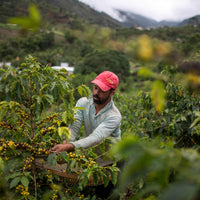
Ginimao Estate sits at 1,150 metres at Holadagadde, in the Chikmagalur district, on the edge of the Bhadra Tiger Reserve. The estate forms part of a wider habitat that supports native fauna. Steven Rebello runs the century old estate as part of the Kaadkappi collective, a small group of growers who put the forest ahead of the coffee. Over the last two decades he has regenerated the Arabica

GinimaoflavourchartIndia.webp

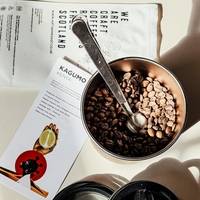
Roasted medium, Ginimao is an accessible and moreish introduction to Indian coffee. Butterscotch runs through the whole cup, thick and sweet over a biscuity shortbread base. Dark chocolate and pecan sit over this along with hints of a sweet cedar spice. A juicy orange acidity holds the coffee together before raisin, plum and vanilla come through on the finish. The roast level holds everything in harmony, and balance to the cup from start to finish.

GinimaoillustrationIndia.webp

The S795 Steven grows crosses Kent, an older Indian selection with Typica in its parentage, with S288. S795 carries local significance. The research station at Balehonnur, in the same district, bred and released it in the 1940s. Eighty years on it is still what Ginimao plants, and it is the selection in this micro lot.
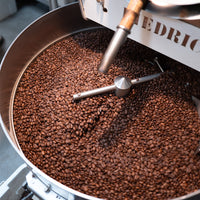
For this lot pickers sort the ripe cherry, and the mill pulps it before it reaches fermentation barrels. Steven adds a yeast culture grown on coffee cherry, then leaves it to ferment without oxygen for 72 hours. Washing follows, and the coffee dries in the shade on raised beds over 15 days. A cultured yeast ferments differently from the mixed microflora that arrives on the fruit, and the difference carries through roasting into the cup.


you might also like: